

In water you can find everything: materials, energy, life. For this reason, we should not be surprised that the presence of precious minerals in seawater is enormous. As a matter of fact, recovery and valorization of these minerals has been carried out for millennia and today receives renewed interest from a circular economy and sustainability perspective.
Selective precipitation, what is and where is used?
The best-known process that exploits the minerals dissolved in sea water is the production of table salt (sodium chloride, NaCl) by evaporation in saltworks. This process uses selective precipitation, atechnique that separates ions from a solution by selectively precipitating one or more of them while leaving the others dissolved. Selective precipitation used in saltworks is essential to obtain high purity sodium chloride (>97%), avoiding the extraction of other salts that are unsuitable for human consumption.
How does selective precipitation of salts work?
The concentration of a substance in water measures the amount of solute (the substance) dissolved in a certain volume of solvent (in this case, water). Each of the many substances dissolved in water has its own limit concentration, called saturation concentration. If this is exceeded, supersaturation occurs, the substance inevitably precipitates, separating from the solution. Supersaturation can be obtained with different methods: by evaporation of the solvent, by temperature variation or by chemical reaction (reactive precipitation).
In table salt production, selective precipitation occurs through the progressive removal of the solvent by evaporation. The process progress is monitored using a concentration factor (CF), calculated as the ratio between the initial volume and the volume after evaporation. As the CF increases, some substances present in solution reach supersaturation and precipitate. Typically, in saltworks the first to precipitate are gypsum (CaSO4 2H2O) and other calcium salts, followed by NaCl. This gradual precipitation, together with the use of several evaporative ponds in which seawater is transferred, allows the achievement of a very precise CF range to obtain extremely pure table salt.
Circularity and mineral recovery, what else can be selectively precipitated from water?
The residual waste solution after the precipitation of NaCl, called Bittern, is usually dispersed in the sea as it no longer has any value for table salt producers. However, it still contains large quantities of minerals like magnesium chloride or magnesium sulphate, concentrated up to 30 times their initial value during evaporation. The economic potential of extracting these minerals is significant. Moreover, this process could positively influence the circularity and sustainability of obtaining magnesium minerals, which are typically extracted through land mining.
Another example where selective precipitation could be applied for mineral recovery is that of residual wastewater from the reverse osmosis, RO, desalination process. In this process, seawater is pumped up to high pressures and made to pass through the membranes, dividing the flow into two streams: one of water permeated through the membrane completely free of salts; and another retained by the membrane, called generically brine, where salt concentration is increased and needs to be disposed of.
The CF of this type of brine is usually around 2.2, an ideal value for feeding the brine into the selective evaporation and precipitation process already used in saltworks, first producing Calcium salts and then NaCl.
So, what is the process to produce table salt and magnesium?
ResourSEAs (RES) and University of Palermo (UNIPA), at Aqualia’s WAVE center in Adeje in Tenerife are testing a process with a two steps evaporative system. The first step precipitates calcium salts, up to CF 6.2, and sodium salts, from CF 7.5, by evaporating the retentate of a reverse osmosis desalination plant. To evaporate the brine, a multiple solar ponds system (mimicking a saltwork) has been built, Figure 1.
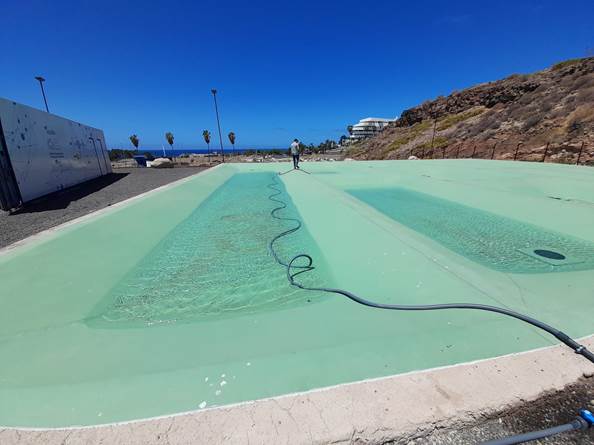
Figure 1 Solar ponds for the two steps evaporation of calcium and sodium salts
The design of these ponds was performed using local meteorological data and correlations developed during an ad-hoc experimental campaign. The second step involves the reactive crystallization of magnesium hydroxide from the residual brine with CF >20. This process is done by adding an alkaline reactant to the brine using a specially designed reactor patented by RES, Figure 2.
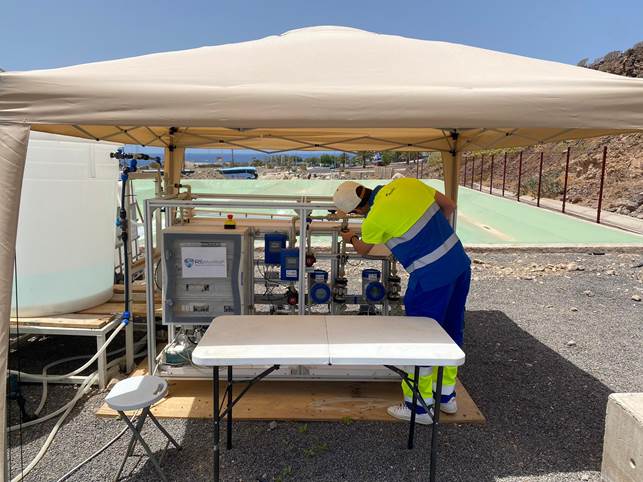
Figure 2 Reactive precipitation reactors patented by RES
Interested in more REWAISE news and updates? Follow the project on LinkedIn, X and YouTube.
